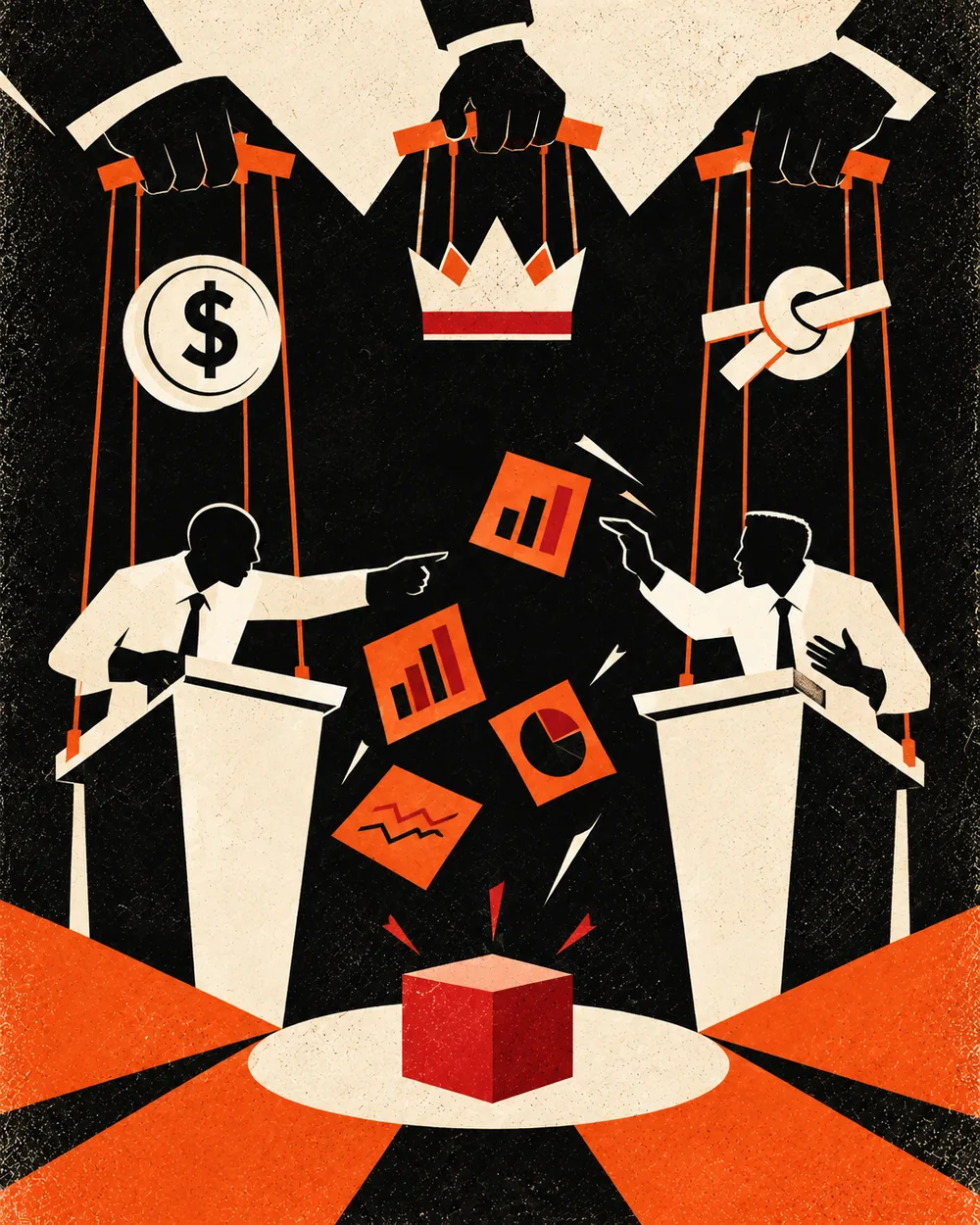
Product organizations are political. I do not mean that as an insult. People have history, incentives, budgets, teams, status, customer relationships, career risk, and beliefs about the future. Those things enter the room whether the roadmap template acknowledges them or not.
This becomes obvious when a product leader tries to redirect capital away from a legacy product protected by a powerful executive. The product leader arrives with a better roadmap. The executive arrives with ten years of revenue, customer relationships, organizational allies, and direct access to the CEO.
Then everyone acts surprised when the roadmap loses. The mistake is not that Product failed to be persuasive enough. The mistake is fighting a political allocation problem as though it were a product argument.
“My roadmap is better” is weak leverage
Imagine the company has two legacy product lines and a new platform strategy. The board wants a three year modernization story. The CEO wants a clean strategic narrative. The CFO wants capital discipline. The business unit leaders want their products to survive.
You walk in and say the new platform has a stronger vision. Maybe it does. That does not answer the real objections. How much cash flow disappears? Which customers are exposed?
What happens to margin? Where do the people go? What has to be true for the new platform to compensate for the loss? When does the old product become a drag instead of a hedge? Those are not roadmap questions.
They are enterprise questions. If you keep the conversation at the product level, the person defending the existing business has stronger ground because their evidence is tangible. Revenue today beats possibility tomorrow unless you change the frame.
Move the fight to explicit tradeoffs
Capital allocation gives you a stronger frame. Instead of: “Legacy Product A is old and the new platform is better.” Try: “We are currently investing $X each year to preserve Product A. That capital protects $Y in revenue but prevents us from funding the platform at the level required to reach the new market. Here are the transition risks. Here is the value we believe the new bet creates. Here is the point at which continued investment in A becomes more expensive than the cash flow it protects.”
Now the disagreement is different. It is still political. But the politics have less room to hide inside subjective product preference. Everyone can see what is being defended and what is being sacrificed. That is a more useful conflict.
Do not pretend stakeholders are irrational
It is tempting to describe the executive defending the legacy product as resistant to change. Maybe they are. Maybe they also understand something you do not. They know which customers will panic. They know which sales commitments are fragile.
They know the operating cost of migration. They know which people will leave. They know what the board was told two years ago. Politics often contains information. The product leader's job is not to purify the decision of human interests.
It is to separate legitimate constraints from protected assumptions. Ask: What specifically are we protecting? Revenue? Margin?
Customer continuity? Headcount? Status? A capability? A relationship?
What evidence supports the concern? What would make the concern smaller? What would we have to believe for the capital shift to be irresponsible? Now the opposition is contributing to the decision instead of simply blocking it.
Make the loss explicit
Political conflict gets worse when leaders pretend nobody has to lose. That creates the strategy deck with fifteen priorities and no actual concentration. Keep the legacy product. Fund the AI platform. Modernize the architecture.
Enter the new market. Protect margin. Do not disrupt teams. Maintain every customer promise. Now everybody is temporarily happy.
The strategy is impossible. Real portfolio leadership eventually has to say: This gets less. This team moves. This product enters maintenance.
This line sunsets. This customer segment is no longer where we are trying to win. That is where politics becomes unavoidable. Do not run from it. Make the tradeoff explicit enough that the company can decide whether the loss is worth the future it is buying.
Product leadership is not product supremacy
There is another trap here. Some product leaders respond to organizational politics by becoming ideological. “Product should own the roadmap.” “Stakeholders should give us problems, not solutions.” “Leadership should empower the team.”
Those principles can be useful. They are not magic words. A board deciding where to deploy hundreds of millions of dollars is not violating product purity by caring about cash flow, employment, contracts, or market signaling. Senior product leadership requires translating product logic into enterprise logic.
You have to understand the business well enough to make your recommendation relevant to people whose accountability is larger than the product. That is not surrendering product craft. It is product leadership at a different altitude.
Design a frame politics cannot easily obscure
You cannot remove politics from important decisions. You can make it harder for politics to masquerade as strategy. Put the capital on the page. Put the current economics on the page. Put the future assumptions on the page.
Put the customer exposure on the page. Put the displaced work on the page. Put the decision owner on the page. Then let people argue. A good decision process does not eliminate conflict.
It improves the quality of the conflict. The next time you are trying to move an organization away from a protected product, do not arrive with only a better product argument. Bring the enterprise tradeoff. Because if the actual fight is about capital, identity, revenue, and power, a prettier roadmap is not strategy.
It is ammunition for the wrong battle.