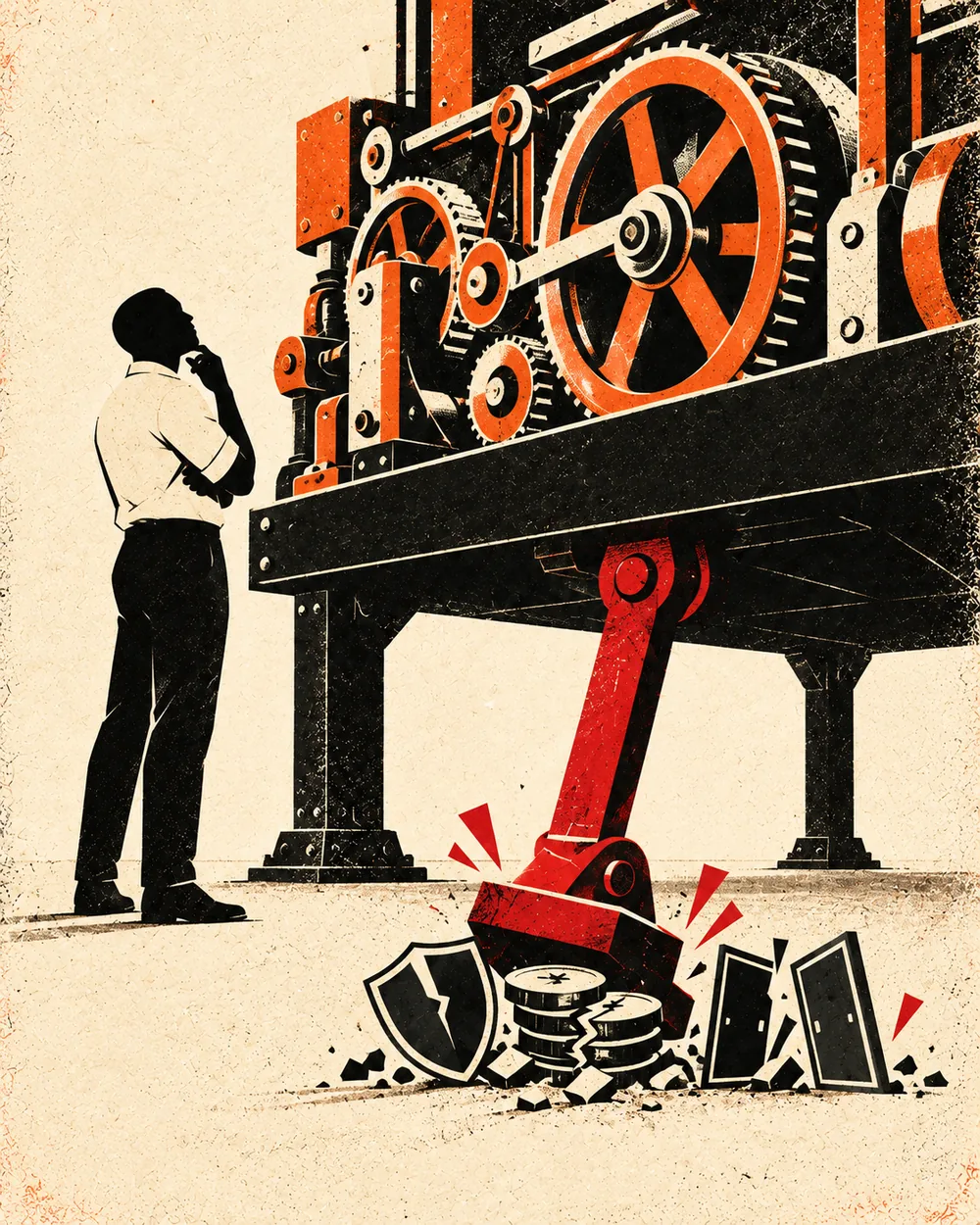
There are two bad versions of “technical PM.” The first says: “I am not technical. Engineering handles that.” The second learns enough vocabulary to sound like an engineer and starts telling Engineering which architecture to use. Neither is the standard I want. Technical fluency for Product is consequence literacy. You should understand technical choices well enough to know how they change product constraints, future options, operating cost, reliability, and speed of change.
You do not need to impersonate the person making the engineering decision.
“Can we build it?” is the smallest question
Many consequential technical decisions are not binary feasibility questions. Yes, the team can probably build it. What happens next? How does it behave at ten times the volume? Where does failure show up to the user? What becomes harder to change later? What operational burden does the choice create? What assumptions are getting baked into the system? Which other teams become coupled to it? What is the architecture optimizing for?
Those questions move Product into the tradeoff without asking Product to own the implementation. Martin Kleppmann’s work in Designing Data Intensive Applications is useful here because it keeps returning to properties such as operability, simplicity, and evolvability. A system is not good merely because it works today. It has to be run, understood, and changed. Product should care about all three.
Architecture moves cost through time
A technical choice rarely removes a tradeoff. It relocates one. A team can move faster now by creating a local solution that becomes expensive to integrate later. It can reduce infrastructure cost by accepting lower resilience. It can create flexibility by adding abstraction that makes the system harder to understand. It can standardize aggressively and reduce local speed. It can optimize for scale the product may never need and pay complexity upfront.
It can optimize for today and create a migration six months from now. There is no architecture without a product consequence somewhere. That is why “Engineering owns architecture” should never become “Product does not need to understand what the architecture changes.”
Ask consequence questions, not trivia questions
A PM does not become useful by memorizing what Kubernetes does. The vocabulary can help. The judgment comes from asking better questions. What are we optimizing for? What becomes harder because of this choice? What does failure look like from the customer’s point of view? What gets expensive at scale? What becomes difficult to unwind? Which assumptions would make this architecture the wrong choice? What new operating responsibility are we creating?
What capability do we gain that the simpler option cannot provide? Those questions give Engineering room to bring expertise while making the product implications explicit.
Local technical freedom can create portfolio product cost
I saw a version of this in a large retail frontend ecosystem with dozens of store applications. Let every team choose whatever framework it prefers and each individual decision can look reasonable. A team already knows the technology. A new library solves the immediate problem elegantly. The local implementation moves faster. Across the portfolio, though, the company can pay for that freedom through duplicated components, inconsistent behavior, harder mobility between teams, more integration complexity, and more ways for the user experience to fragment.
Narrowing the environment and encouraging shared components was not a Product decision about which framework was technically superior. Engineering owned engineering judgment. The product conversation was about the system consequence: How much local flexibility are we willing to trade for coherence, reuse, maintainability, and speed across the portfolio? That is a different question. It is also a product question.
That said, the engineering boundary still matters
There is a reason experienced engineers get nervous when Product starts talking architecture. A partially informed leader with authority can do real damage. They read an article. They hear that microservices are modern. They decide the company needs them. They demand a framework because another company uses it. They treat technical vocabulary as decision authority. That is not fluency. That is cosplay with consequences. The goal is not for Product to select the architecture.
The goal is for Product to understand enough of the tradeoff to participate responsibly in decisions that materially change the product. Engineering should be able to say, “This option gives us more resilience but increases operational complexity.” Product should understand why that matters to customers, cost, roadmap speed, and future bets. Now the partnership is working.
Technical debt is not the only future cost
Product teams often hear about technical debt after the choice has already been made. That is useful, but consequence literacy should start earlier. Future cost can show up as: Longer integration time. Slower incident recovery. Higher cloud spend. More difficult data migration. A permission model that cannot support the enterprise segment. A shared dependency that makes five teams coordinate every release. A product capability that becomes expensive to separate later.
Those are strategic option costs. Product does not need to calculate them alone. It needs to make sure they enter the decision.
Understand what you are buying
The next time a consequential technical choice comes up, resist both bad instincts. Do not leave the room because “that is Engineering.” Do not grab the marker and design the system yourself. Ask what the choice buys. Ask what it gives up. Ask when the tradeoff changes. Ask what future product decision becomes easier or harder because of it. Technical fluency is not the ability to sound technical. It is the ability to follow the consequence far enough that the product decision is made with the whole tradeoff visible.