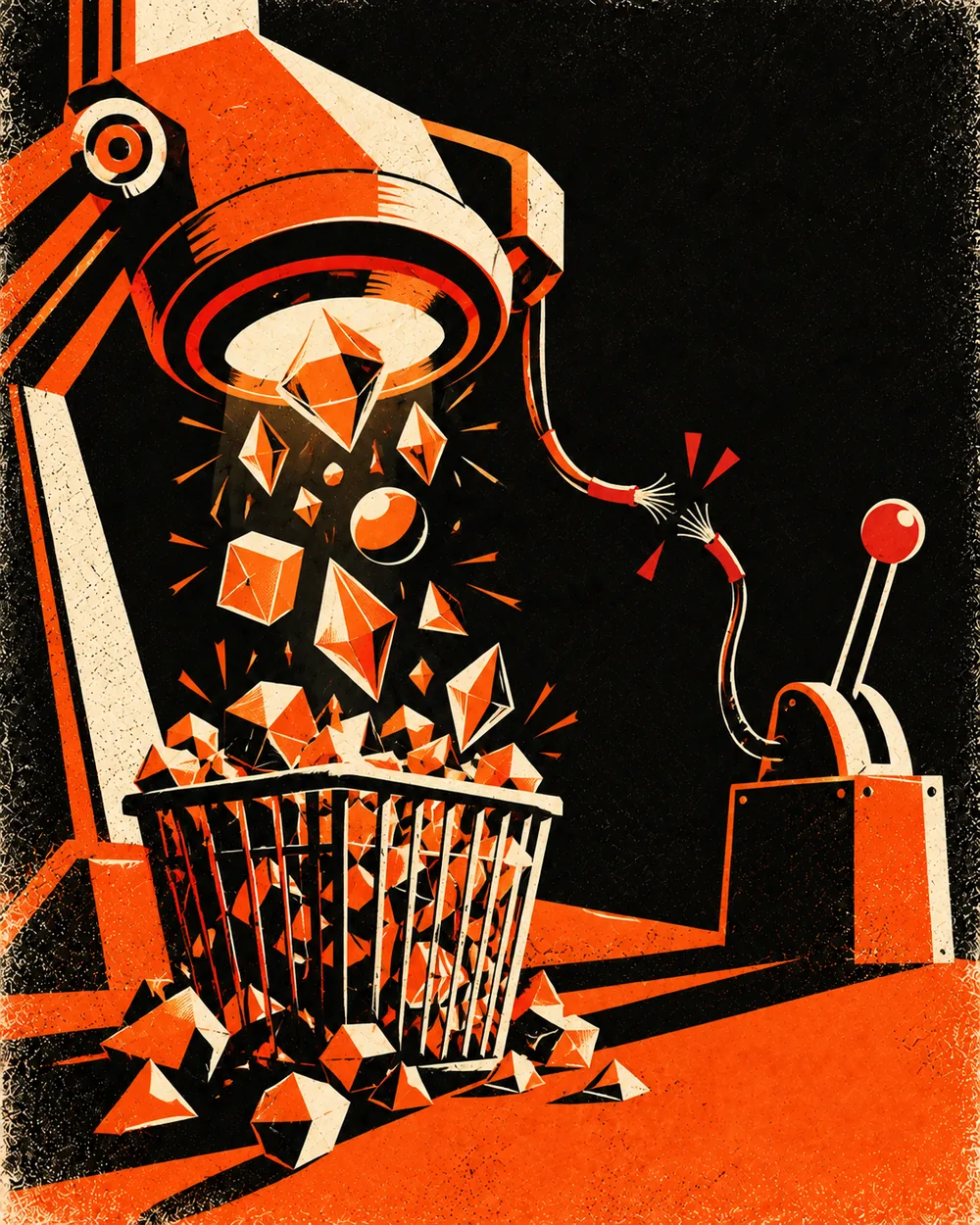
A system can know something useful and still fail to create value.
In retail, imagine a computer-vision capability that correctly identifies a likely shelf gap. The signal is good. The product is probably somewhere in the building. The issue matters because an empty shelf can become a missed sale.
None of that puts the product back on the shelf. The value appears only if the signal reaches the right person, at the right moment, with enough context and authority for something useful to happen next. That distance between knowing and doing is part of the Product problem.
Insight is an input, not the outcome
AI makes it easier to produce intelligence at scale: predictions, rankings, summaries, recommendations, alerts, suggested actions. Those outputs can be genuinely good. Product can still fail farther downstream.
If the associate never sees the shelf-gap signal, it dies. If the signal arrives after the useful window, it dies. If it lives in a dashboard nobody checks during the work, it dies. If the person sees it but has no way to act, the model can be completely right and economically irrelevant.
The Product question is not only was the recommendation correct? It is also what happened because the recommendation existed?
Follow the signal into the workflow
Once the system produces something useful, keep watching.
Who receives it? Is that the person who can do something about it? Does it arrive in the workflow they are already using or in another place they have to remember to visit? Do they understand why the recommendation matters? Does the product bring enough context to make the next action clear?
Then the organizational questions appear. Does the person have authority to act? Does another team need to approve it? Is there enough capacity to respond? Does the recommended action conflict with another metric or priority? Is ignoring the alert easier than resolving it?
Those conditions can matter more than squeezing another small improvement out of model quality. A slightly less sophisticated recommendation that appears inside the real work, at the right moment, with a clear next step can create more value than a brilliant insight living three clicks away.
OSA makes the action path visible
On-shelf availability is a useful example because the distance between signal and outcome is easy to see.
A retailer can have increasingly sophisticated ways to detect that product should be on the shelf but is not. Computer vision can identify a gap. Inventory systems can suggest that the item exists somewhere in the building. Analytics can tell you the problem matters financially.
The customer still sees an empty shelf until somebody does the recovery work.
Directed tasking can therefore be more valuable than another dashboard. The signal becomes part of a product experience that helps the right associate understand what needs attention, where to go, and what action to take. The intelligence is upstream. The Product outcome lives farther down the chain.
The same pattern shows up in AI products that have nothing to do with retail. A risk score matters when it changes the review. A recommendation matters when it changes the decision. A summary matters when it changes what somebody notices or does next.
Measure conversion from useful output to responsible action
I like decision conversion rate as a practical Product question, not as a universal metric everybody should adopt. Of the recommendations or insights that are useful enough to matter, what happens next?
Some are ignored. Some are considered and rejected. Some are accepted. Some turn into action. Some actions actually produce the intended result.
Those states are different, and lumping them together hides useful evidence. If a system produces a thousand relevant recommendations and almost none affect the workflow, generating two thousand recommendations is probably not the next Product problem. The product has a conversion problem somewhere between output and action.
Low conversion tells you where to investigate
Do not assume people are resisting the technology just because they ignore it.
The timing may be wrong. The recommendation may not be trusted. The user may lack enough context to understand it. The action may require authority they do not have. The team may have no capacity to respond. The recommendation may conflict with an incentive or an operational priority the model never saw.
Or the insight may simply be interesting rather than useful. Those are different diagnoses. Watching what happens after the recommendation can tell Product where the next improvement belongs.
Maybe the system needs better quality. Maybe it needs a better explanation. Maybe the workflow needs a clearer next action. Maybe the insight belongs with a different role. Maybe the system should stop generating that class of recommendation entirely.
Product design should continue past the moment of intelligence
Sometimes the highest-leverage improvement is not a smarter model. It is making the responsible next action easier. If the system identifies a problem, can it assemble the evidence needed to resolve it? If it flags a risk, can it bring the relevant context into the same place? If it recommends a change, can the product show the available options and the constraints around them?
That does not mean every system should act autonomously. The point is that Product design should continue through the action path instead of treating the insight surface as the finish line.
Authority belongs in that design too. If the person receiving the recommendation cannot make the decision, the product should acknowledge the actual path rather than pretend the alert itself created the outcome. Maybe the next step is an approval. Maybe it is an escalation. Maybe a different role should receive the signal first.
The broader operating model may still be part of the problem. The narrower Product question here is: did the intelligence have a credible path into action?
More conversion is not always better
A healthy AI product should not reward people for obeying the machine. Sometimes the right response is to reject the recommendation because the person has better context. Sometimes the system should stop before acting because the consequence is high. Sometimes a recommendation should be reviewed specifically because the model is uncertain. The goal is not maximum acceptance. It is responsible conversion: the right output reaches the right decision, and the human or system has enough context to act appropriately.
Measure what changed because the system spoke
Model reliability and economic return both matter. Between them sits another Product question: did a useful output actually convert into a meaningful response?
Was the useful output seen? Was it understood? Was action possible? What happened next? Where did the chain break?
Those answers can point to a better next Product decision than another round of model tuning. The AI was right. Good. Now ask the more important question: what changed because it was right? If the answer is nothing, the intelligence may still be impressive. The product is not done.