AI makes capable people faster.
I want to say that plainly because this conversation gets weird fast. The mistake is not believing AI creates real acceleration. It does. The mistake is assuming that because one part of the work got dramatically faster, every other part of the system got faster at the same rate.
A product leader hears that AI can generate the first version of a custom approval workflow in a fraction of the old estimate. Six weeks becomes two. Maybe less. Suddenly the request looks cheaper.
“AI changes the math.” Yes. But what part of the math changed?
Cheap generation is real
If an engineer can get from idea to working implementation faster, that is real capacity. If a designer can create an interactive prototype without waiting for a separate engineering cycle, that is real capacity. AI also raises the capability floor. A backend engineer with AI can produce a user interface that is worlds better than what that same engineer might have produced alone. A designer can build functioning software instead of stopping at a prototype.
But lowering the effort required to execute a task is not the same thing as transferring the full discipline required to judge the result. Give a master carpenter a cordless drill and the carpenter gets faster. Give the same drill to someone who has never built a wall and the drill still works perfectly. What did not transfer was the knowledge of framing, load, materials, sequencing, finishing, and what good work looks like when the easy part is over. AI can democratize execution without democratizing mastery at the same rate.
Generation time is not product cost
Imagine a flagship enterprise customer wants an approval workflow that mirrors its internal purchasing thresholds and audit rules. Engineering is already committed, so under the old estimate the request would clearly displace something else. Then somebody says the team can use AI coding tools to move much faster. Fair. Reopen the tradeoff.
But do not stop the estimate at the first working version. What about understanding the existing architecture, validating the permission model, testing exceptions, integrating with customer identity systems, reviewing security, verifying the audit history, supporting the workflow in production, and maintaining the business rules after the original builders have moved on? Those costs did not automatically disappear. There is still a product question underneath all of them: Should this thing exist?
The cost shifts
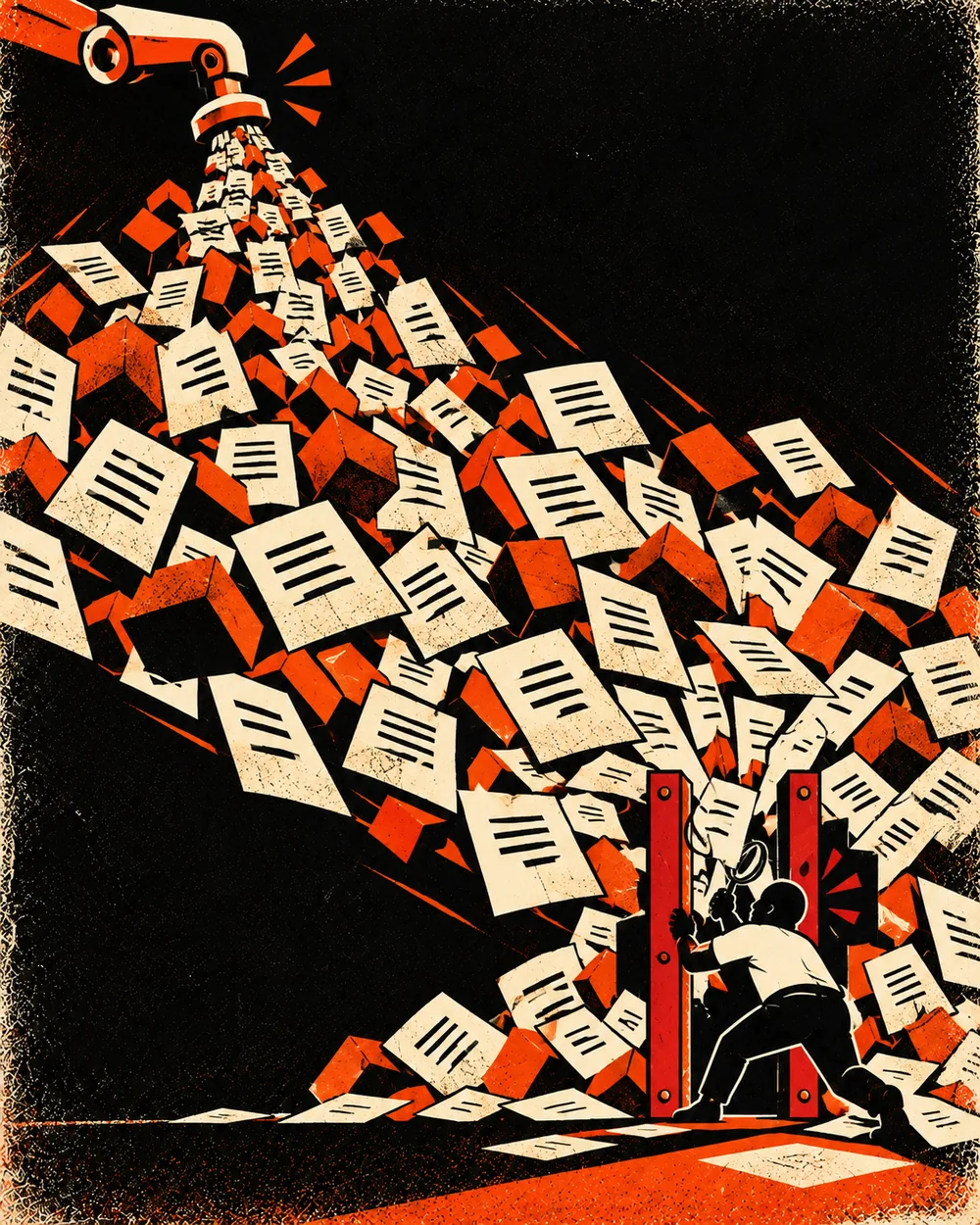
I do not mean that an hour of senior review literally costs more because AI generated the code. I mean the relative economics changed. If generation time falls sharply while verification, integration, security, production ownership, and judgment fall much less, those activities become a larger share of the cost of trusted delivery. If teams also generate more candidate work because creation is cheaper, total demand on those scarce disciplines can grow. That is constraint migration.
This is why I want product leaders asking: What became cheaper, and where did the scarcity move?
A prototype is not the whole discipline
AI is incredibly good at making an idea look real early. That is useful. It also makes the visible artifact cheaper before it necessarily makes the entire discipline cheap.
The engineer can produce working code faster. The designer can produce a polished interface faster. The PM can produce a strategy narrative faster. The researcher can synthesize a body of interviews faster.
The artifact may be excellent. But the artifact is not the discipline. The designer's job was never only drawing the screen. The engineer's job was never only typing code. The PM's job was never only writing the strategy deck.
The harder part is knowing what should be true, what evidence matters, which tradeoff is acceptable, what edge case changes the decision, and what “good” looks like when the thing meets reality. AI can compress a lot of execution. It does not automatically compress all of that judgment with it.
Production is a different problem
A prototype has to demonstrate that something can work. A production product has to survive the company. Architecture, permissions, security, observability, maintainability, compliance, failure recovery, support, and ownership all show up after the demo feels convincing. This is why “AI can build the prototype now” does not automatically mean “this software is trivial to operate for years.” The mountain got smaller. It did not turn into flat ground.
The bottleneck can move into the organization
Now zoom out from one product team. Imagine a large retailer where people across Product, Engineering, Design, Operations, Finance, Supply Chain, and other functions suddenly have dramatically more ability to generate ideas, prototypes, analyses, and working software. That is a huge opportunity. It can also become a throughput problem if the rest of the organization does not change.
Stores cannot absorb unlimited operational experiments. Training cannot change every hour. Physical inventory does not behave like a web page. Safety, customer commitments, capital, and field execution still exist. Leaders still have to understand consequential bets well enough to be accountable for them.
A digital product with mature experimentation infrastructure may be able to absorb local tests differently from a physical business where a change can alter labor, inventory, store operations, or customer experience. That does not mean the physical business should stay slow. Its growth path has to include the infrastructure that makes greater speed safe: decision rights, guardrails, experiment boundaries, measurement, and ways for teams to move locally without routing every consequential choice upward. Give every team AI without changing those things and you may not create a distributed innovation system. You may create a much faster escalation system.
Judgment is an organizational capacity
This is why the bottleneck is not only code review. It can be the number of experiments the field can absorb, the amount of change a customer facing organization can support, the number of consequential decisions leadership can responsibly evaluate, or the number of operating changes a store network can implement without creating chaos. AI can increase the supply of plausible options much faster than an organization increases its capacity to choose among them. At that point, judgment becomes throughput. The answer is not to slow everyone back down. The answer is to redesign the system around the new speed.
Move more decisions closer to the work where the risk allows it. Create boundaries inside which teams can experiment without executive approval. Build reliable instrumentation. Define what must escalate and what should not. Preserve human accountability where the consequence requires it.
AI should change the operating model around delivery, not merely the speed of the person generating the first artifact.
Where you are on the curve matters
The productivity evidence around AI is not one universal number. Different tasks, tools, disciplines, business models, and experience levels produce different results. People who already know how to move quickly can become dramatically faster. People who previously lacked the ability to execute a full idea can suddenly do much more on their own.
Both are valuable. The same tool still does not create the same result everywhere. Proper use requires knowing how to frame the work, provide context, evaluate the result, and recognize when the output is confidently wrong. AI absolutely makes people faster. The question is where you are on the curve, what part of the work got faster, and whether the people and the organization have the judgment to know what still is not done.
Estimate the whole system
When AI changes delivery economics, update the model. Do not cling to the six week estimate because that is how the team used to work. But do not replace it with the two week generation estimate and pretend the rest of the system became free. Estimate the whole path: generation, review, testing, security, integration, observability, support, maintenance, failure recovery, operational absorption, and the human judgment required for the risk of the work. Maybe AI really does make the custom workflow worth the tradeoff. Excellent. Now you have a better decision.
Maybe the first version arrives dramatically faster while the remaining delivery system changes much less. Also useful. The point is not to discount AI. The point is to put the acceleration in the correct system. AI can make execution cheap. It can make capable people astonishingly fast.
What it does not do automatically is make the entire organization ready to move at the same speed.