Product people are often trained to sell an idea. Explain the customer pain. Paint the vision. Show the prototype. Describe the competitive threat. That can work until the conversation reaches the people accountable for the investment.
Now the question changes. They are not asking whether the idea is exciting. They are asking whether the economics hold together. And sometimes the answer is pretty simple:
The math ain't mathing.
Enthusiasm is not an investment case
Imagine the CEO wants AI summarization added to an enterprise analytics platform. Competitors are shipping similar capabilities. Sales wants a differentiator. Product sees a possible retention opportunity. Engineering sees variable compute cost.
At a startup, this conversation might happen directly with the CFO or founder. In a large enterprise, it is more likely to happen with the leaders who own the capital and commitments: a business VP, technology VP, portfolio leader, finance partner, or some combination. The title matters less than the accountability. Somebody has capital committed against an expected return. Product is proposing a bet that has to fit inside those economics.
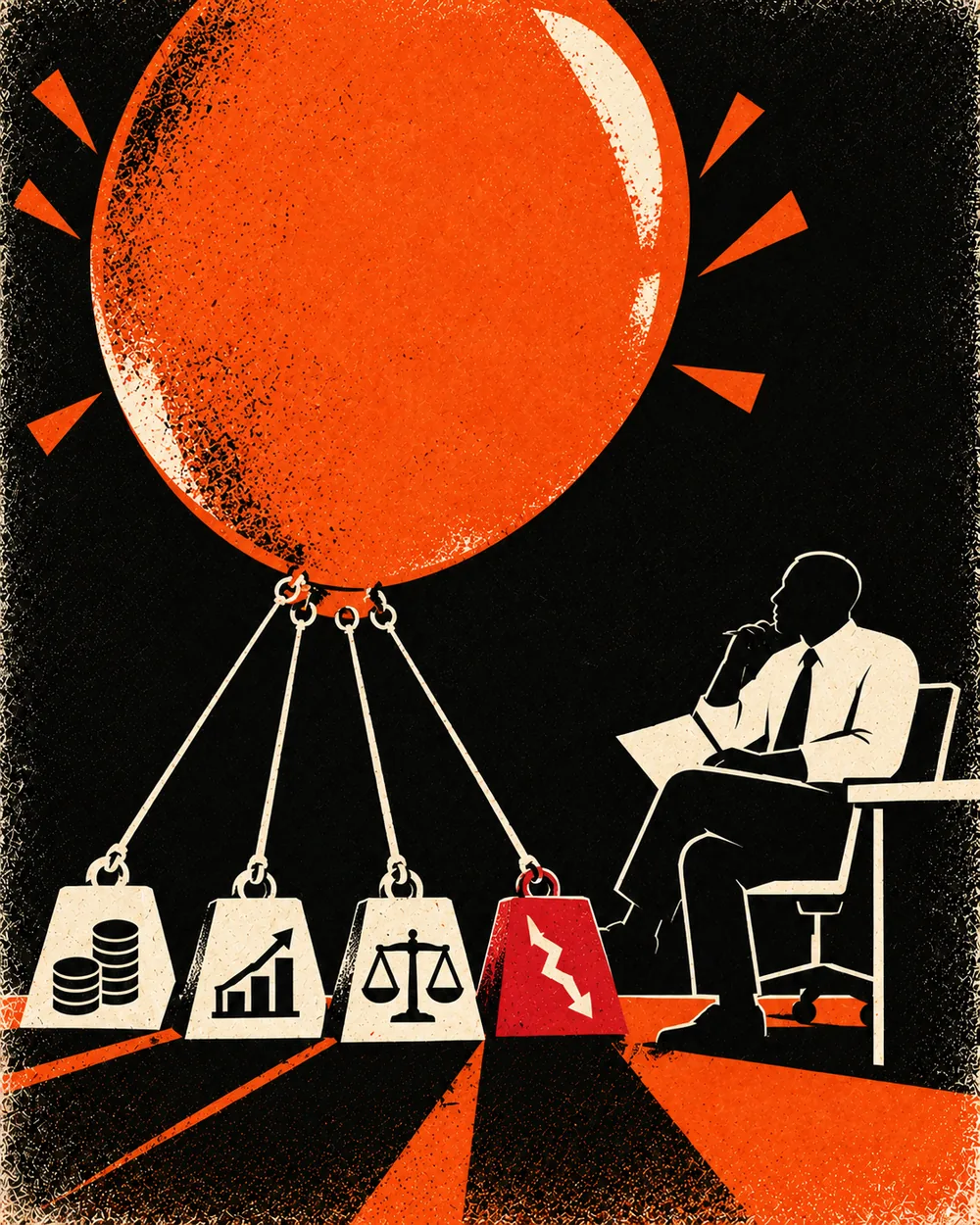
A feature deck is not enough. Customer problem, market trend, prototype, competitive pressure, expected adoption: all useful, still incomplete. The investment conversation starts when you can explain what the company is spending, what changes economically if this works, what assumptions connect product behavior to that result, what it costs to serve as usage grows, and what would make you stop, change the package, change the architecture, or ask for more capital. Those are product questions too.
Show the economic mechanism
“Customers love summarization” is not a financial argument. Neither is “this will improve engagement” or “AI is becoming table stakes.” The useful question is:
How does the product behavior create business value?
Maybe summarization helps customers reach an answer faster and improves retention. Maybe it makes a premium package more valuable. Maybe it reduces an expensive support workflow. Maybe it improves win rate where the capability has become expected.
Maybe none of those effects is proven yet. Say that too. The point is not to manufacture a revenue story because somebody wants numbers. Show the chain of belief: we believe this customer behavior changes; if that changes, we expect this business outcome to move; if that outcome moves, the investment creates value through this mechanism. Now everyone can inspect the same thesis.
The economics have to survive the cascade
In a large company, the product team is rarely inventing value in isolation. The enterprise has objectives and financial commitments. A business function owns part of those outcomes. Technology has its own investment and execution commitments. Product sits in the seam, translating those commitments into problems worth solving and bets worth making.
That means a team can build something that works from a product perspective and still create a bad investment.
The feature ships. Customers use it. The operating metric moves. Then somebody looks at the cost structure and says:
“We got the outcome, but this thing ate the return.” That is another version of the math ain't mathing. Maybe the AI capability improved the workflow, but variable cost consumed too much of the benefit. Maybe the return is smaller than assumed. Maybe the feature only works with different packaging, a narrower segment, or a cheaper technical approach.
The product outcome and the investment outcome are connected. They are not the same thing.
Uncertainty is why you need the model
Product teams sometimes get weird around financial models when the inputs are uncertain. “We do not know adoption yet.” Correct. “We do not know whether customers will pay for it.” Also correct.
“We cannot prove the retention impact yet.” Same answer. That does not make the model useless. That is why you need it. A model is not valuable because it predicts the future perfectly. It makes assumptions visible before the company starts spending as though they were facts.
Show a low case, show the case you currently believe, and show what happens if usage is substantially higher. If the investment only works when every optimistic assumption lands, say that. If one variable controls the whole decision, circle it. Do not hide the fragile assumption in row 147 of the spreadsheet.
Sensitivity should change the product plan
Suppose the business case looks attractive at moderate adoption, then usage climbs. Great, unless serving that usage gets expensive faster than the value you capture. Or suppose the economics look strong if the feature supports a premium tier but weak if Sales insists it belongs in the base product. Maybe the return depends on a retention effect the team has not observed yet. Those are not automatically reasons to kill the idea. They are reasons to design the investment differently.
You might cap usage, test willingness to pay before committing to the full architecture, instrument the behavior tied to retention, start where the value mechanism is strongest, or set a funding gate before more work.
Sensitivity analysis is not just Finance stress testing a spreadsheet. It tells Product what has to be tested, priced, instrumented, controlled, or redesigned.
The economic model should be able to change the product plan.
Give the people funding the bet a way to be wrong safely
A good investment case does not only say why the company should fund the idea. It explains what happens if the thesis is wrong.
Maybe the team asks for enough capital to prove adoption and the value mechanism, not enough to fund the entire vision. Maybe it defines the signals required before the next funding decision. Maybe deteriorating economics trigger a packaging or architecture change. Maybe strong usage without the expected business outcome means the investment does not automatically expand.
Now the people accountable for the money can see a control system around the bet. You are not promising certainty. You are showing that uncertainty has an owner.
The one page is a forcing function
I still like a one page investment brief. Not because executives cannot read more, but because product teams can hide weak reasoning inside twenty slides. A good brief should make the logic hard to escape: The bet — What problem or opportunity are we funding? The investment — What capital and capacity are required now?
The value mechanism — How is product behavior expected to create economic value? The economics — What costs move with usage, and what return standard matters here? The assumptions — What do we know, infer, and still have to prove? The sensitivity — Which variable can change the decision? The controls — What will we test, cap, stage, monitor, or stop?
The recommendation — Fund it, do not fund it, or fund the next uncertainty instead of the whole vision.
Finance is not the department of no
There is a lazy Product versus Finance story: Product wants growth, Finance wants control, and Finance is standing between innovation and progress. I do not buy it.
Finance is asking questions Product should want answered. Can the company afford to be wrong? How quickly will we know? What happens if demand is much larger than expected? What if customers love the capability but refuse to pay more for it? Where does the downside stop?
Product brings customer behavior, market context, technical possibilities, and product judgment. Finance brings discipline around capital, cash, margin, risk, and return. Business and technology leaders bring the commitments they are already accountable for. The decision gets better when none of those groups pretends its language is the whole business.
Know what you are asking the company to believe
Product management is the work of making bets under uncertainty. Eventually those bets consume money, talent, infrastructure, and attention. At senior levels, you cannot separate product judgment from the economics of the bet. You do not need to become the CFO. You may never present the case to the CFO at all.
You do need to know what the company is spending, what has to become true for that spending to create value, which assumption can break the thesis, and what you will do if it does. That is the difference between pitching a feature and recommending an investment. The people funding the bet do not need less ambition. They need to know the ambition has an economic operating system around it.